
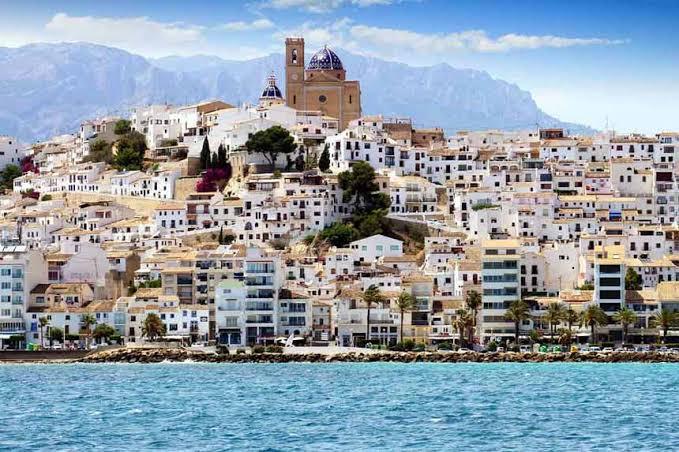
To discover some of the most beautiful towns in Alicante on your first getaway, we suggest six stops: Guadalest, Altea, Calpe, Moraira, Jávea, and Dénia. You can spend one day visiting two destinations or explore the entire selection with two overnight stays along the way.
In this guide, we focus on the province of Alicante. We combine an inland village with coastal towns of different sizes: in addition to historic centers, you will find harbors, beaches, and viewpoints. The route lets you discover several of the landscapes and historic sites featured on the official tourism portal of the Valencian Community.
First, decide how much time you want to spend walking, visiting monuments, or relaxing by the sea. Then organize the driving. Below, you will find a comparison of the six destinations, suggested parking areas, and itineraries for one-, two-, or three-day trips.
Which Towns in Alicante to Visit Depending on Your Trip
For a one-day excursion, we recommend Guadalest and Altea. Spend the morning inland and the afternoon exploring Altea’s old town. If you prefer a day focused on the coast, choose Calpe and Moraira.
To visit all six destinations, set aside three full days. The visit times in the table below are our recommendations for a first visit; they do not include travel time from your accommodation.
Town | Suggested visit | Recommended time | Distance from Alicante Airport | Approximate driving time |
|---|---|---|---|---|
Guadalest | Castle, Casa Orduña, and valley views | 2–3 hours | About 77 km | 1 hr 05 min |
Altea | Old town and viewpoints | 2–3 hours | About 71 km | 50 min |
Calpe | Historic center and seaside walk | 3–4 hours | About 77 km | 55 min |
Moraira | Castle, promenade, and El Portet | 2–3 hours | About 95 km | 1 hr 10 min |
Jávea | Historic center plus one additional area of your choice | 3–4 hours | About 111 km | 1 hr 15 min |
Dénia | Castle, Baix la Mar, and harbor | 3–4 hours | About 104 km | 1 hr 10 min |
The distances refer to road routes between the airport and each town, rather than to a specific parking area. We have rounded the driving times from the routes we checked; they do not include traffic delays or time spent looking for parking. For Guadalest, Altea, and Calpe, the reference distances are approximately 77, 71, and 77 kilometers.
For Moraira, Jávea, and Dénia, the routes checked indicate approximately 95, 111, and 104 kilometers. In Jávea, this reference uses the approach via the Ondara area; other routes may show different distances. Recalculate the journey using the address of your first stop.
Map of the Towns and How to Organize the Route
For the complete trip, we suggest the following order:
Alicante → Guadalest → Altea → Calpe → Moraira → Jávea → Dénia → Alicante.
In the itineraries below, we use Alicante city as the starting and return point. The table above, however, is intended for travelers arriving at the airport. Before starting navigation, replace the origin with your hotel or the agreed vehicle pickup location.
You can divide the route by day: Guadalest and Altea; Calpe and Moraira; and Jávea, Dénia, and the return to Alicante.
These links are useful for viewing the routes between towns. As you approach each destination, select your chosen parking area instead of requesting directions directly to a church, castle, or street in the historic center.
Calculate driving time and sightseeing time separately. Add time for meals, walking from the car, and collecting luggage from your accommodation. This will help you decide which stop to shorten if you prefer to spend longer somewhere else.
Guadalest: Castle and Valley Views
Start with the historic area and allow time for the Casa Orduña and San José Castle. In the house museum, you can visit domestic rooms, a library, and collections that help explain how an influential local family once lived. The house also provides access to the castle, which stands on the rock at the highest point of the village.
Then spend some time enjoying the views over the valley and reservoir. Our suggestion for this first stop is simple: a cultural visit followed by a walk with pauses to take in the scenery. The local council also identifies the dam as a good viewpoint, although reaching it requires planning a separate visit from the historic center.
Two or three hours is enough for this first itinerary without adding several museums. If you want to visit additional collections, have lunch in the village, or go closer to the reservoir, extend your stay and shorten your afternoon schedule.
How to Get There and Where to Park
The local council indicates access via the CV-70 from Benidorm and the CV-755 from Altea. Choose your route based on your starting point and the latest directions from your navigation app.
Look for the parking area in the lower part of the village and continue the visit on foot. For people with reduced mobility, the tourist office identifies accessible facilities in this area as well as other alternatives, such as the reservoir dam, where parking is also available. Check the appropriate route before deciding which admission tickets to purchase.
Altea: Old Town and Mediterranean Viewpoints
In Altea, spend most of your visit walking up to Plaza de la Iglesia. There you will find the Church of Nuestra Señora del Consuelo, with its blue-and-white tiled domes, as well as the nearby Mirador de los Cronistas de España viewpoint. You can continue walking through the streets of the historic center and visit the Glorieta del Maño.
For a first visit, we suggest walking up to the old town, stopping in the square, and then heading back down toward the seafront promenade. There is no need to schedule every stop precisely: allow around two or three hours to walk, have a drink or snack, and enjoy the views.
If you are coming from Guadalest, avoid booking lunch with an overly tight arrival time. You will need to park and complete part of the journey on foot before sitting down at the restaurant.
Parking and Access to the Old Town
One specific option is Parking Plaza del Ayuntamiento, at Plaza José María Planelles, 1. According to the operator, the old town and church are around a fifteen-minute walk away. The car park also provides convenient access to the shopping area and seafront promenade.
Keep changes in elevation in mind when choosing your route. Altea Tourism recommends San Miguel and San José streets as alternative access routes for people with reduced mobility, although it warns that other parts of the old town have slopes and may be difficult to navigate.
Before walking uphill, check the latest time for retrieving your vehicle from the car park, especially if you plan to stay for dinner.
Calpe: Old Town, Salt Flats, and Views of Peñón de Ifach
In Calpe, also known as Calp, you can start in the historic center and around the Torreó de la Peça, which is connected with the town’s former fortifications. Spend a short time exploring this area before continuing toward the coast.
For a nature stop, consider the salt flats. The tourist office identifies them as an important wetland for birdwatching, including flamingos. Observe the wildlife from designated areas and bring binoculars if you want to spend more time here.
Choose two areas for your half-day itinerary. You can combine the historic center with the beach or replace part of the urban walk with a visit to the salt flats. There is no need to squeeze in every attraction before continuing to Moraira.
Parking and Visiting Peñón de Ifach
To begin in the center, you can use Parking Plaza Mayor, with access from Avenida de Valencia, 7. The operator states that it is open 24 hours a day and has a height clearance of 2.1 meters. Check whether your vehicle meets the requirements before entering, especially if you are carrying accessories on the roof.
Climbing Peñón de Ifach requires separate planning. The regional government requires a reservation to follow the Red Route from the visitor center toward the tunnel and summit. It also advises against children continuing beyond the tunnel because of the difficulty and danger of the trail. Do not add this climb spontaneously to a short stop.
For this multi-town road trip, we recommend leaving the climb for another day.
Moraira: Seaside Walk and a Stop at El Portet
Start at Moraira Castle, next to L’Ampolla Beach. This 18th-century fortification was built to defend the coastline from pirate attacks. Inside, you will find information about watchtowers and piracy in the Mediterranean.
Afterward, choose between extending your walk through the center or visiting El Portet, a sheltered cove of sand and rock protected by the Cap d’Or peninsula. The regional tourism portal identifies this area as the starting point for several walking routes, including the route toward the watchtower.
For this trip, we recommend visiting the area around the castle and then making a second stop by the sea. If you plan to swim, eat, and spend time on the beach, allow half a day instead of treating Moraira as a one-hour stop.
Where to Park and How to Continue the Journey
Use Les Sorts as your first parking reference. The local council also lists the Passeig del Senillar car park among Moraira’s parking areas. When you arrive, follow local signage and check the conditions of use for the parking area you choose.
Do not assume that you will be able to park next to El Portet. Decide whether moving the car is worthwhile or whether it makes more sense to leave it parked and adjust your walk to the time available.
In our itinerary, Moraira occupies the second afternoon. For a three-day trip, we recommend staying overnight here or nearby before continuing to Jávea the following morning.
Jávea: Historic Center, Harbor, and Viewpoints
In Jávea, or Xàbia, it is best to choose which areas you want to visit before you arrive. The town has three main areas of interest for visitors: the historic center, the port, and Arenal. Do not treat them as a single stop that can be fully explored in one hour.
In the historic center, visit the fortified Church of San Bartolomé, known in Valencian as Sant Bertomeu. Its battlements and defensive elements illustrate the building’s dual religious and protective role.
For the second part of your visit, you can choose Duanes de la Mar, the harbor district, where you will find the Church of Nuestra Señora de Loreto and the waterfront. If you prefer a panoramic stop, consider the Cap de Sant Antoni viewpoint.
For a three- to four-hour visit, we recommend exploring the historic center and choosing one of these two alternatives. Leave the coves and a full beach day for another excursion.
Parking and Getting Around
For the historic center, the local council provides paid underground car parks at Plaza de la Constitución and Portal del Clot. Select one as your navigation destination and explore the center on foot.
Before adding the port or a viewpoint, calculate the extra driving time and the return to your car. If you are continuing to Dénia afterward, leave enough time to visit the castle or fishing district there. Focus your morning on the two stops that interest you most.
Dénia: Castle, Fishing District, and Harbor
In Dénia, organize your visit around two routes: the castle and city center on the one hand, and Baix la Mar and the harbor on the other.
The pedestrian entrance to the castle is on Carrer Sant Francesc. From Plaza de la Constitució, you can choose a route with stairs or an alternative route via Loreto and Sant Narcís streets. Inside the complex, you will find various defensive structures and views over the city and surrounding area.
For the second walk, Dénia Tourism suggests an approximately two-kilometer route through the fishing port and Baix la Mar, taking an estimated one hour to one hour and fifteen minutes. You can stop at the Explanada Cervantes and walk through the squares of the fishing district, including Sant Antoni and Mariana Pineda.
Allow three or four hours to combine both areas. If you want to visit a museum or have a longer lunch, shorten one of your earlier stops.
Parking and the Return Journey
Parking La Vía, on the street of the same name, is listed in the municipal tourism directory as offering 24-hour service. It is one option to consider when starting your visit to the city.
If you are returning to the airport, calculate the journey there rather than to Alicante city. The reference route from Dénia is approximately 104 kilometers and just over one hour of driving, before adding traffic, refueling, or time required to return the car.
On the day of your flight, adjust the itinerary according to your departure time and your airline’s instructions.
Road Trip Routes Through Alicante’s Towns in One, Two, and Three Days
The following itineraries share the same first stops. For two- or three-day trips, we recommend staying overnight along the route rather than returning to Alicante every evening. The distances are approximate figures between towns; add any extra driving required to reach beaches, viewpoints, and accommodation.
One-Day Route: Guadalest and Altea
Route: Alicante → Guadalest → Altea → Alicante.
Leave in the morning with the aim of starting your visit to Guadalest at around ten o’clock. Spend approximately two or three hours exploring the historic area and decide where you want to have lunch before beginning the next stage.
In the afternoon, park in Altea and walk up to the old town. Explore the square, stop at the viewpoint, and head down toward the seafront promenade depending on how much time you have left. If you want to return before dinner, finish your visit by late afternoon.
As a reference, the routes checked total approximately 145 kilometers: around 63 kilometers to Guadalest, 22 between Guadalest and Altea, and 59 back to Alicante. The theoretical driving time is around two hours and ten minutes. When planning the day, we recommend allowing between two and a half and three hours for driving, including access roads and possible delays.
If you prefer to visit several museums in Guadalest, keep the afternoon in Altea shorter. If your priority is walking around Altea and having dinner there, limit the morning to the castle and historic surroundings of Guadalest.
Two-Day Route: Add Calpe and Moraira
Day one: Guadalest and Altea, with an overnight stay in Altea.
Day two: Calpe and Moraira, followed by the return to Alicante.
Start the second morning in Calpe. Visit the historic center and then choose between a walk by the sea or a stop at the salt flats. Continue to Moraira for lunch or spend the afternoon there.
From Altea to Calpe, the reference distance is approximately eleven kilometers and fifteen minutes. Between Calpe and Moraira, allow around fourteen kilometers and twenty-five minutes; the return from Moraira to Alicante is approximately 81 kilometers and one hour.
These are driving references only and do not include sightseeing or additional travel within each town.
If you prefer a long swim at El Portet, shorten your Calpe itinerary. If you have booked the Red Route at Peñón de Ifach, allow more time for that activity and consider removing Moraira from the second day.
Three-Day Route: Add Jávea and Dénia
Keep the visits from the first two days, but spend the second night in Moraira or nearby. On the third day, start in Jávea and continue to Dénia afterward.
From Moraira to the center of Jávea, the reference route is approximately thirteen kilometers and twenty minutes. Between Jávea and Dénia, it is around eleven kilometers and twenty minutes, excluding detours to viewpoints.
For the morning, we suggest Jávea’s historic center plus one short second stop. Then spend the afternoon visiting Dénia Castle and Baix la Mar. Adjust the order according to the castle’s opening hours on the date of your visit.
The return journey from Dénia to Alicante city is approximately 92 kilometers and one hour and five minutes on the route checked. Leave enough time to rest before driving and avoid extending your final visit until you no longer have enough time to return comfortably.
If you want to enjoy beaches, museums, and longer walks in both destinations, add a fourth day or choose only one of them for your third day.
Tips for Exploring the Costa Blanca by Car
Adjust Your Itinerary to Your Travel Dates
Before setting out, check the weather forecast and any notices affecting the natural areas you plan to visit. In hot weather, schedule the most demanding walks early in the morning and leave time for lunch and rest.
Also check any attractions that require advance reservations and the opening hours of car parks. Write down a second parking option for each town. This will allow you to change your destination without having to search for alternatives while driving.
Choose a Vehicle Based on Your Passengers and Luggage
When arranging your car rental in Alicante, start with the practical requirements of the trip: how many people will be traveling, how much luggage you will have, and where you will be staying.
Before confirming a convertible, ask how much luggage space is available with the roof configuration you intend to use. For a trip involving several overnight stays, make sure you can store your luggage without occupying passenger seats.
Also check the included mileage, return conditions, and procedure for adding an additional driver. Ask for the specific conditions that apply to your booking and chosen vehicle.
Combine Driving With Exploring on Foot
Save the entrance to the car park in your navigation app, not just its name. Check the permitted vehicle height and the dimensions of the entrance before driving in.
Wear suitable footwear for walking and check the pedestrian route if you are traveling with a stroller or need to avoid stairs. When you return to the car, check the driving time for the next stage before adding an unplanned stop.
Frequently Asked Questions About Beautiful Towns in Alicante
What Are the Five Most Beautiful Towns in Alicante for a First Visit?
For a selection of five destinations from this guide, we recommend Guadalest, Altea, Calpe, Moraira, and Jávea. Combine them according to your preferences and add Dénia when you have a full third day available. This is an editorial selection designed to help organize a trip, not an official ranking.
What Beautiful Towns Are Close to Alicante City?
For a first excursion, we recommend Guadalest and Altea. From Alicante city to Guadalest, the route checked is approximately 63 kilometers; between Guadalest and Altea, the reference distance is around 22 kilometers. Do not use the airport travel times in the table above when planning this excursion.
How Many Towns Can You Visit in One Day?
We recommend two so that you have enough time to walk, eat, and visit at least one monument. Three stops may be possible if you shorten each visit, but it is best to decide in advance what you are willing to skip. For an excursion involving swimming or hiking, choose one main destination and keep the second stop optional.
Can These Places Be Visited Without a Car?
Yes, public transport alternatives are available for parts of the route. TRAM d’Alacant operates Line 9 between Benidorm and Dénia, while the Guadalest local council mentions a bus connection operated by Llorente Bus.
Choose Your Car for Exploring the Costa Blanca
Once you have decided on your dates and route, browse ClanRent’s convertible cars and premium cars.
Specify the number of passengers, the amount of luggage, and the number of rental days when requesting an offer. Before confirming, agree on the vehicle, rental conditions, and pickup and return locations.
Then save your first stop in your navigation app and leave enough room in your itinerary to enjoy it without rushing.